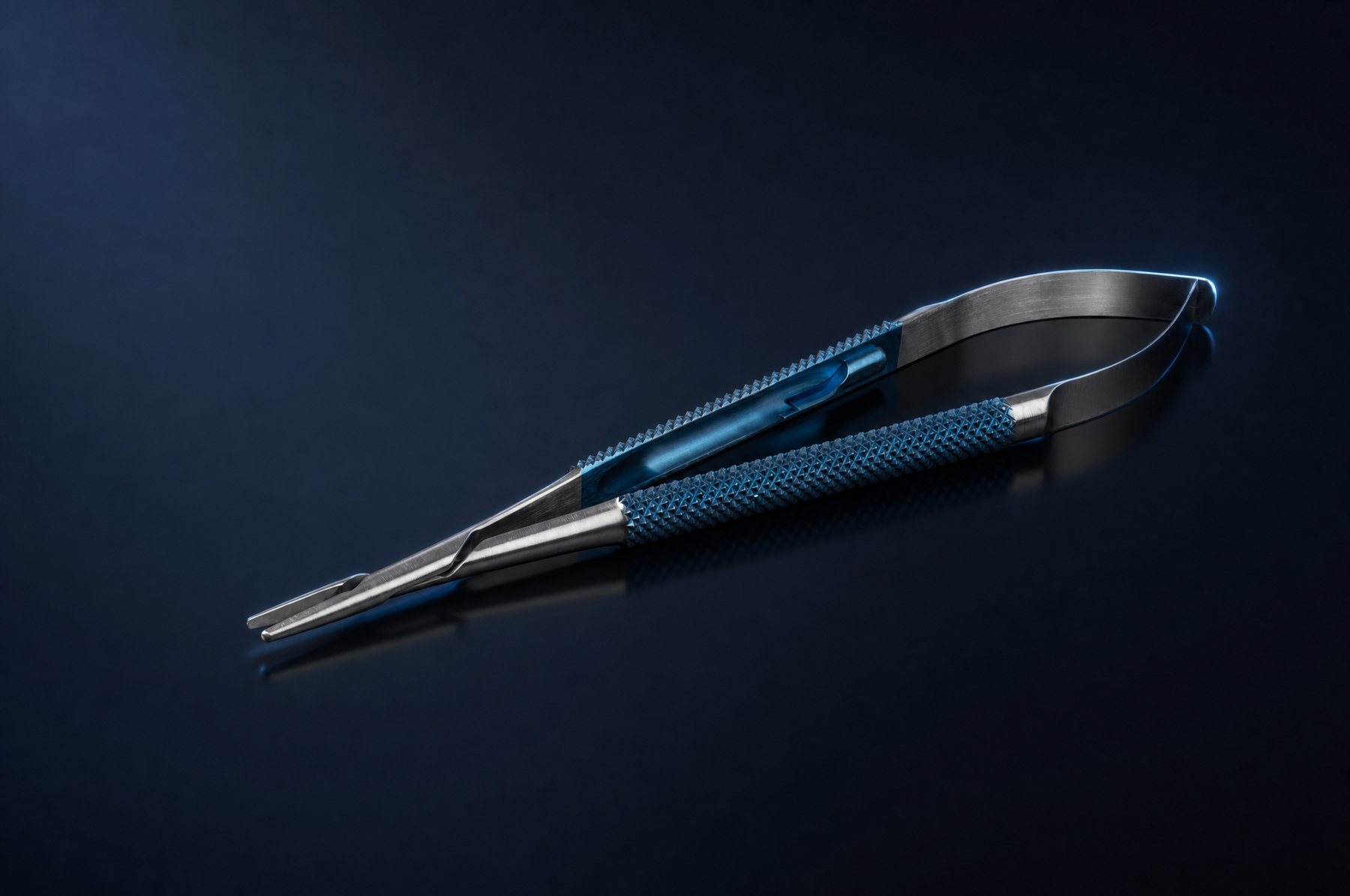
You notice titanium by its weight before you see it.

Titanium here is solid metal, not a coating: around 40 percent lighter than the same instrument in stainless steel and non-magnetic, all the way through and permanently. Where work runs for hours, that is not a detail. Almost everything we make in stainless steel we also make in titanium; 141 variants are currently held in the configurator, more on request.

Manufactured to ISO 13485:2016100% solid metal, not a coating40% lighter than steel100% Made in Germany
MICROQORE titanium instrument in detail
The Material

Why Titanium in Medical Technology?

Titanium is one of nature's most extraordinary metals. It combines extreme strength with low weight, is fully biocompatible, and resists corrosion even under the harshest conditions. In medical technology, titanium has established itself as the material of choice for implants and high-quality instruments.

At MICROQORE MEDICAL titanium is solid metal, not a coating. The instrument is titanium all the way through, not just at the surface. The result: instruments that are lighter, last longer, and can be used in environments where traditional instruments fail.
Properties

What Makes Titanium Special.

Non-magnetic, permanently

Titanium cannot be magnetised, all the way through and not only at the surface. That still holds after years in the tray and after every regrind, because the property belongs to the material.

Non-Magnetic

Titanium cannot be magnetized, making it ideal for procedures near MRI scanners. Indispensable in neurosurgery and MRI-guided procedures.

Lightweight

Titanium is approximately 40% lighter than steel at comparable strength. This significantly reduces hand fatigue during lengthy procedures.

Biocompatible

Titanium is not rejected by the human body and causes no allergic reactions. It is one of the most compatible materials in medicine.

Corrosion Resistant

Titanium forms a natural oxide layer that protects it from corrosion by body fluids, sterilization agents, and aggressive cleaning solutions.

Anti-Reflective

The dark titanium surface significantly reduces light reflections under surgical lights. This improves visibility and reduces eye strain for the surgeon.

Comparison

Titanium vs. Stainless Steel.

Both materials have their place in surgery. The choice depends on the application, requirements, and personal preferences of the surgeon.

PropertyTitaniumStainless Steel
WeightApprox. 40% lighterStandard weight
Surface Hardness3× harder (coated)Standard
MRI CompatibilityFully non-magneticLimited
Corrosion ResistanceExcellentVery good
BiocompatibilityOptimalGood
Reflection Under OR LightsSignificantly reducedCan cause glare
Service LifeExtendedStandard
PricePremiumMore affordable
Visual IdentityDistinctive blue-blackSilver (standard)
Applications

Where Titanium Makes the Difference.

Neurosurgery

The non-magnetic properties of titanium enable use near MRI scanners, a decisive advantage in image-guided procedures.

Vascular Surgery

The low weight and precise haptics of titanium instruments enable the finest work on vessels, where every movement counts.

Microsurgery

The reduced reflection under surgical lights improves visibility during procedures that require the highest optical precision.

Lengthy Procedures

The significantly lower weight of titanium instruments reduces hand fatigue, even during multi-hour operations.

MICROQORE Titanium Series

Unmistakable. In every way.

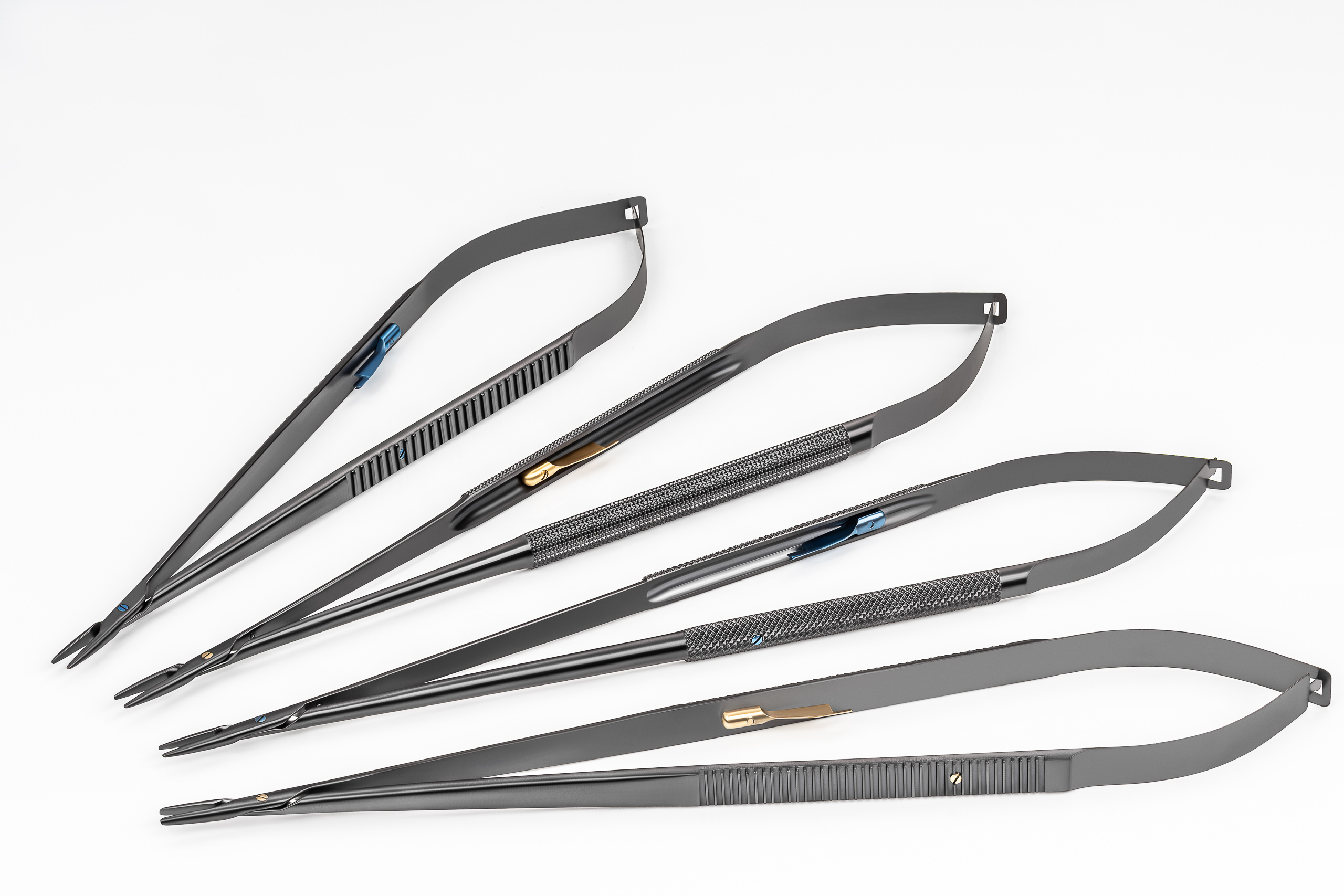
The distinctive blue-black of our Titanium Series is more than a design element. In a full tray you spot a titanium instrument at a glance and do not reach for the wrong one, and you feel the difference by its weight as you pick it up.

Our Titanium Series includes needle holders, forceps, and scissors, all manufactured with the same uncompromising quality that defines MICROQORE MEDICAL.

MICROQORE Titanium instruments collection

Configure your
titanium instrument.

Build your personal titanium instrument or contact us for individual consultation.